
Blogs
See what work the EDC has been carrying out recently
Does the Weather see a Solar Eclipse?

The recent solar eclipse that happened on 12th August 2026 marked the most complete solar eclipse UK has had in 27 years. The Energy Research Unit at RAL has been tracking weather data including solar irradiance and temperature for the past 40 years, and in this blog we explore how these measurements can be used to view a solar eclipse through data.
The EDC at the UKERC Annual Assembly 2026
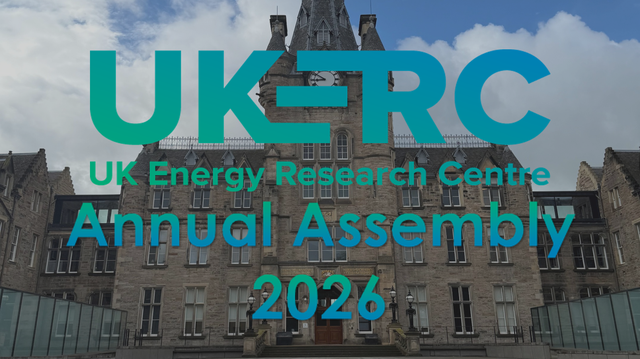
The EDC team attended the UKERC 2026 Annual Assembly held at the Edinburgh Futures Institute, which brought together UKERC members from across the consortium along with members from industry and government. This event showcased the working being done within the UKERC research themes, promoted discussions on the importance of energy research within the current energy landscape, and promoted cross-consortium collaboration through Research Integration. The EDC gave a talk discussing the recent work the team has been doing including the introduction of new data management tools and continued improvements to our service. This led to numerous discussions on new ways the EDC could further collaborate with the wider UKERC consortium.
The EDC attends PyConDE & PyData!
EDC staff Peter Holt and Vivek Mistry attended PyConDE & PyDataDE 2026 in Darmstadt, Germany, combining Python and data communities from across Europe. Key themes included pragmatic architecture choices, growing maturity in Python tooling, and effective data visualisation practices relevant to the platforms we use. Volunteering at the conference strengthened community engagement and professional connections. The event provided actionable insights to support EDC’s technical roadmap, developer workflows, and long‑term maintainability, reinforcing the value of simplicity, communication, and sustainable software development.
Change in the Energy Data Centre Leadership: Farewell from Catherine Jones and introduction to Peter Holt

Catherine Jones reflects on six years at the Energy Data Centre upon her retirement. She highlights some of the changes to the EDC service that have happened over her time with the team, as well as some pf projects within the wider data manager that Catherine was apart of.
Three Visualisations added to the EDC
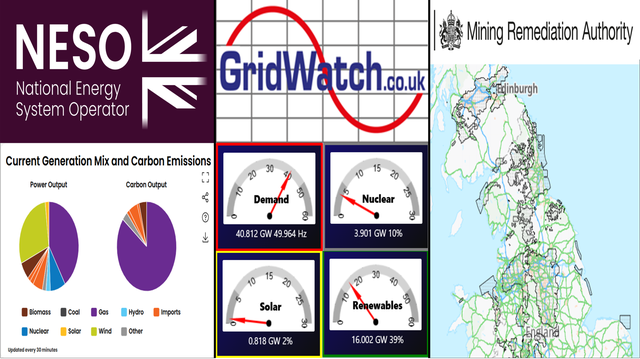
Access to three new visualisations are now available from the EDC Portal's Visualisations tab. Information and links to the NESO Carbon Intensity Dashboard, GridWatch, and the Mining Remediation Authority Map Viewer can be found here. These visualisations contain useful displays on UK data such as the carbon impact of the Great Britain's electricity system, the distribution of different sources in Great Britain's power generation, and areas of which are affected by current and previous mining activities respectively.
Love Data Week 9th - 13th February 2026
Love Data Week is an annual celebration of Data, with this year's theme being "Where's the Data?". This blog discusses what Love Data Week is about, what this year's theme means, and what the EDC does to ensure it takes care of the content it holds and follows best practices when it comes to preserving data.
2025 Annual Review
Welcome to the Energy Data Centre’s 2025 annual review. We have had an interesting and varied year supporting the energy research community, please have a read about our achievements and activities from the past year
National Oceanography Centre (NOC) user research survey

National Oceanography Centre (NOC) are running a user research survey for a NERC / EDS project called "High5 for AI", a collaboration between: Science and Technology Facilities Council (STFC), British Geological Survey, UK Centre for Ecology & Hydrology (UKCEH), the National Centre for Atmospheric Science (NCAS) and the National Oceanography Centre (NOC). Read for more details.
Meet the EDC Team: Vivek Mistry - Research Software Engineer

This is the second of two blogs introducing the two new members that have joined the EDC team in 2025. This blog introduces Vivek Mistry, the team's new Graduate Research Software Engineer. It covers details of his reasons for joining the EDC, interests within Computer Science and the tasks he is looking forward to completing.
NEW FEATURE: discover our content by Topics

Searchers can now discover content on the EDC Portal by specific research areas to complement introductory guides. Our introductory guides cover Energy Demand Reduction, Energy Storage, Heat and Whole Energy Systems. The guides cover policy and research activities in these four topic areas and the new topic functionality allows for exploration of the content held in the EDC on that subject and relevant government Areas of Interest. They are a good starting point to find out about relevant, active research projects in these areas.
Meet the EDC Team: Oliver Brough - Data Steward

This is the first of two blogs introducing the two new members that have joined the EDC team in 2025. This blog introduces Oliver Brough, the team's Graduate Energy Data Steward. It covers details of his academic background, areas of interest in Energy Research, and how he will contribute to the EDC and help it achieve the goals it strives for.
Why Preserve? Thoughts from the EDC team for World Preservation Day on 6th November

World Preservation Day is the 6th November and on that date the international preservation and curation community come together to celebrate and raise awareness of the profession. This year the theme is Why Preserve and in this blog each EDC team member share their answer to the question posed. In summary it is because energy knowledge has long-term value and impact on the society we all live in. Read more in the full blog.
EDC team participated in the Career and Skills for Data-driven Research network+ launch
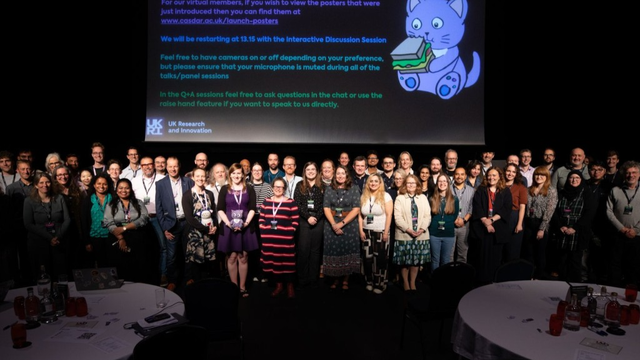
On the 18th September, Catherine Jones and Oliver Brough from the Energy Data Centre headed to Birmingham for the launch of the Career and Skills for Data-driven Research network+. The pair showcased their vital work to make energy data more accessible - with a lightning talk on energy modelling data-sharing challenges and a poster on improving the hashtag#FAIRness of our data portal. It was a delight to meet with colleagues, old and new. We're excited to participate in the network and watch it grow over the next five years!
Dealing with data in UK energy research: outputs from a Cross Consortia Engagement meeting

In November 2024, staff from 20 UK energy research centres met for the Cross-consortium Engagement Meeting (CCEM). It enables UK's energy research consortia and funding councils to strengthen connections, collaborate on projects and discuss topics of interest. This meeting focussed on managing research data: why it matters, the challenges, and what is being done to make data more accessible, usable and available for the long-term. This demonstrates the commitment to share and improve practice in this area. In this blog, we explore the outcomes and how centres like the Energy Demand Research Centre (EDRC) and the UK Energy Research Centre (UKERC), who co-lead the CCEM, can improve their data management for their own researchers and beyond.
Updated EDC brief guides on data management topics for researchers

In March we launched the updated set of brief guides on a selection of data management topics. These are introductory guides to a topic and fit on a piece of A4 paper. - Data Management Checklist - Submitting data to the EDC - Data behind a publication - Research software: citation and credit - FAIR Data
Making UKERC4's research data available: how did we do?
Research data is an important outcome of research. Making it accessible to everyone in a way that can be reused helps the whole research community to reproduce research. Making research data available, alongside journal articles and research software, is crucial to maximising our impact, the value of our work, and public investment. UKERC has long believed in the principles of proactive data management to benefit its researchers and the wider energy research community.. At The Energy Data Centre (EDC), the team created and monitored the planning process, giving specialist advice when requested. This blog post reviews the progress the EDC has made, what data is now available and from where.
New Collection: the publications of the Faraday Institution
The Faraday Institution is the UK's independent institute for electrochemical energy storage research, skills development, market analysis, and early-stage commercialisation. It produces publications from insights into specific topics to research reports. The Energy Data Centre is now collecting this content to increase the discoverability of it and to enhance the EDC's collection of grey literature
New Collection: the outputs of the Centre for Research into Energy Demand Solutions
The Centre for Research into Energy Demand Solutions (CREDS) ran from 2018 to 2023. Their research demonstrated how reductions in energy use are essential for the transition to a fair, zero-carbon society. With agreement from the CREDS team, the EDC have curated the publications and gathered together information on CREDS outputs into a new Collection to aid in the discovery of the outputs of this research Centre.
New EDC publications searching interface released

The EDC Portal's publication search and browse functionality has been updated and enhanced to give a better user experience. Publications from different parts of the system have been brought together to form a single discovery service which gives access to over 1600 reports, consultation responses and other material from the UK Energy Research Centre, the Energy Technologies Institute and other projects. Publications can be browsed by energy category, subject and document type and there is comprehensive search functionality. Results can be filtered by these categories and dates.
CREDS/UKERC Data Sharing in Energy Consortia workshop
A recent CREDS/ UKERC Data Sharing Workshop, gathered system stakeholders together to discuss how to improve data sharing in the energy research community. Publishers, data managers, research centre managers, funders and researchers were invited to the expert workshop to reflect on the lessons learned by CREDS and UKERC, add their own lessons and make a series of recommendations. The final report and the briefing note are now available for downloading.
Spatial and Temporal Heat Demand and Energy Consumption: Visualisation
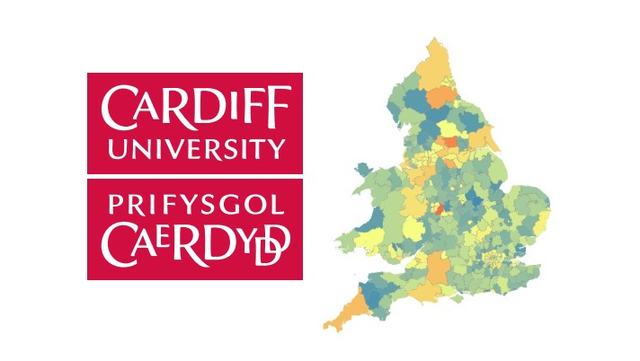
Access to a new interactive data visualisation available from our Visualisations tab. The Centre for Integrated Renewable Energy Generation and Supply (CIREGS) at Cardiff University's School of Engineering was established in 2008 as a multidisciplinary engineering research group with international expertise in the supply, transmission and demand of energy and as a result of recent academic and industry projects have developed methodology for estimating spatial and temporal heat demand and energy consumption for heating in England & Wales, along with a database that includes heat demand time series for Lower layer Super Output Areas (LSOAs) across England & Wales.
New Data Catalogue Experience

We are pleased to announce improvements to searching, browsing and filtering so that it is easier to find relevant data for use and reuse. Improvements to the visual branding of the different datasets assists in seeing at a glance whether the data is held in the EDC. The information page on each dataset has been updated to make it clearer and the license more obvious. The results can be filtered by a range of options, including the dates, subjects and geographic location. The submission process for both curated datasets and suggestions for linked datasets has been streamlined and simplified. We welcome data from all researchers, you do not need to be a UKERC supported researcher to deposit data with the EDC.